
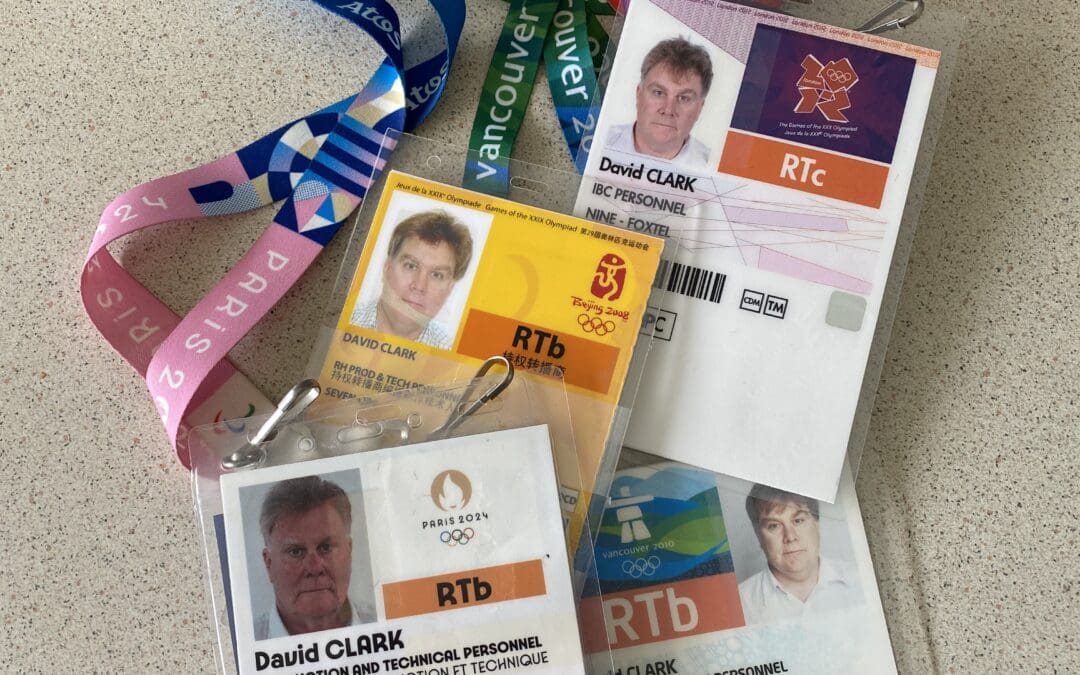
It’s been 25 years since the Sydney 2000 Olympics (or should I say the Games of the XXVII Olympiad), so I want to join the many others who are sharing their Olympic memories.
My Olympic journey started a year earlier when the executive producer of 7’s Olympic Unit Andy Kay offered me the role of head researcher for the network’s Sydney 2000 coverage. Since then, I been part of the Australian broadcast of 10 Olympic Games (summer and winter) as researcher/head researcher for Seven, Foxtel and Nine.
During that time, I have worked alongside many iconic broadcasters and commentators such as Bruce McAvaney, Eddie McGuire, Sandy Roberts, Tracey Holmes, Jim Wilson, Johanna Griggs, Hamish McLachlan, Gordon Bray, James Bracey, Basil Zempilas, Mat Thompson and Brenton Speed, athletes turned broadcasters like David Culbert, Matt Shirvington, Giaan Rooney and Ian Thorpe, outstanding producers like Lesley Tapsall, Mark Laughlin, Adam Cox, Andrew Radford and Jacqui Price, gun researchers Steve Samuelson, Ray Mason, Dave Lyall and Josh Kay as well as brilliant storytellers like Kim Knox, James Knight and Phil Jarratt. Olympic historians Bill Mallon, David Wallechinsky and the late Harry Gordon have also been very handy to know.
A great researcher needs to be a writer, statistician and sub-editor, have an excellent knowledge of their subject, a fact-checker extraordinaire, a keen eye for detail and an instinct for a good story. I’ve never met anyone who fits the whole bill (including me), but I have been part of plenty of teams that do.
When I came on board a year before the Games, Andy Kay brought five filing cabinets into the office and told me he wanted them filled with research before the Games. I created a manila folder for every Olympic sport, every prospective Australian athlete, plus any other newsworthy aspect of the Games such as venues, ceremonies, ticketing, and the torch relay. We subscribed to a newspaper clippings service and each week I photocopied, collated and mailed (yes – by snail mail!) a package to every producer, host, commentator and reporter. Geez we killed a lot of trees! To get to understand each sport, I attended every test event except fencing and wrote almost a thousand pages of bespoke research documents including athlete biographies, sport guides and Parade of Nations. The sadly-no-longer-published Australian Team Handbook and the latest edition of David Wallechinsky’s The Complete Book of the Olympics were also essential resources.
Although how research is sourced, published and distributed has changed over those 25 years, here are some things which haven’t:
- Just knowing there is a capable researcher who has their back makes hosts and commentators more confident, comfortable and relaxed on air.
- It’s not about knowing the answer – the secret is knowing where to find it – though sometimes you have to say: “I don’t know”.
- Research isn’t just about statistics, it’s also about telling stories – but sometimes a good statistic produces a great story and makes a headline
- Good research means there will be fewer surprise results, but when they come, you’ll be prepared.
- Even the most credible sources sometimes get in wrong.
- That old axiom of journalism always applies – it’s better to be right than first.
- Half your research doesn’t get used, but you never know which half!