Photo credit: Liz Finley (daughter of the late Ken Wellman)
Australia has taken part in 15 of the 16 sports/disciplines on the current Winter Olympics program. However, despite ice hockey being on the program at all 25 editions of the Games since 1924 (as well as the summer Games in 1920) our only appearance in the sport came at the 1960 Games in Squaw Valley in the USA.
The team was thrashed in all six matches and conceded 87 goals which remains an Olympic record, leading to comparisons with the Jamaican bobsled team whose debut at the Calgary 1988 Games was immortalised in the film Cool Runnings.
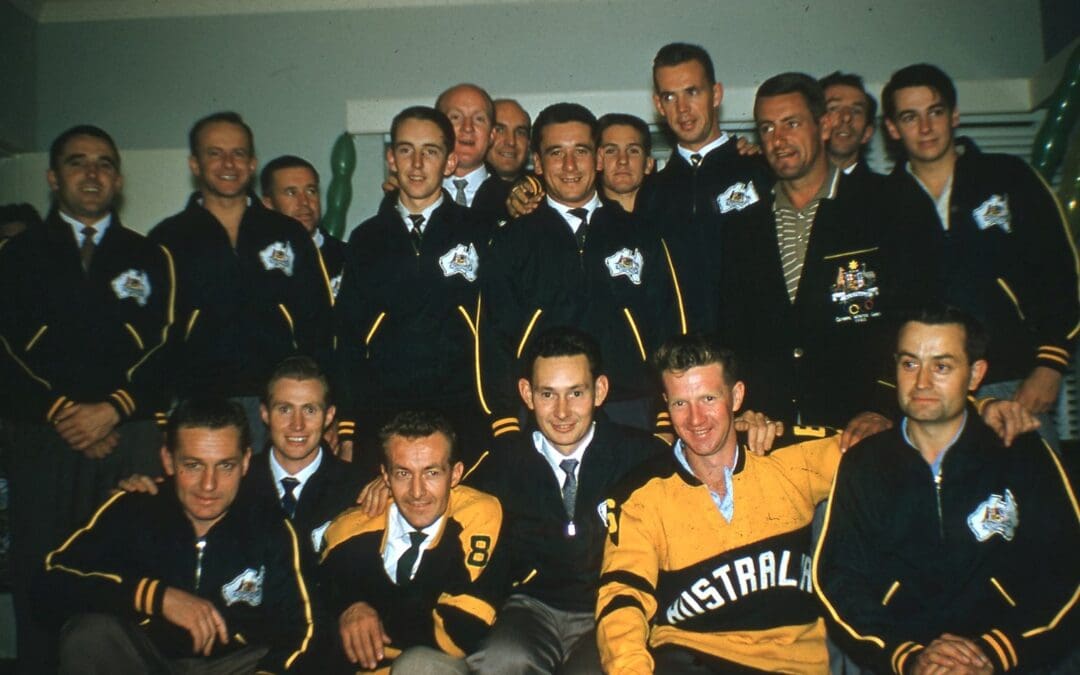
Although a team had been invited to participate and had been selected by the Australian Ice Hockey Federation to compete in the 1956 Games in Cortina d’Ampezzo, the Australian Olympic Federation (as it was known at the time) refused to endorse the team. Four years later, spearheaded by a newspaper campaign led by Melbourne Herald-Sun sports editor Harry Gordon, the federation relented and a 23-member squad began training at Melbourne’s St Moritz ice rink in May 1959.
“We got over there and within a few days we were supposed to be playing hockey,” Basil Hansen told The Sydney Morning Herald in 2010.
“We didn’t have any time to acclimatise, and the valley was 5000 feet [1500m] above sea level, which we weren’t used to. The air was a bit rarefied, the ice was a lot faster than what we were used to and we were all amateurs in the true sense…most of the other teams were not what you would call true amateurs, they were either army or air force and they played hockey seven days a week.”
Amateurs indeed – among the 18-man team was a pastry chef, a fruit and vegetable seller, a plumber and a builder.
They also discovered that referees’ interpretation of the rules – particularly “boarding” – was very different, and international standards had dramatically improved over the last four years. They had also never played outdoors and goal tender Noel McLoughlin had never seen a facemask!
The most dramatic game was the 18-1 opening loss against Czechoslovakia which was marred by violent clashes and political overtones. Two Czech-born players on the Australian team suffered at the hands of their former countrymen: Zdenek (Steve) Tikal was taken to hospital during the second period, while Ivo Vesely was struck in the face by another player’s stick.
“They were naturalised Australians, but it was a big deal as far as the Czechs were concerned because they were classed as traitors to their country, and they wanted to kill,” said Hansen.
Tikal, who had fled Czechoslovakia with his father in 1948 after the communists rose to power, played against his twin brother Frantisek Tikal in the game and according to Seamus O’Coughlin in Squaw Valley Gold (2001) it was actually Frantisek who ended Zdenek’s night. “They collided and the brother from Australia separated his shoulder,” he wrote. It ended his Olympic tournament, as he never played another game.
The pair, who had not seen each other for 12 years, are the only set of siblings to play against each other in ice hockey at the Olympics.
The Australians then lost to eventual gold medallists USA (12-1) in their preliminary group, before playing a consolation round where they twice played the other two teams that finished bottom of their respective groups – Japan and Finland. Australia also lost those four matches so was ranked last in 9th place.
Sixty-six years later, there are two surviving members of the team: Robert Reid and Peter Parrott.
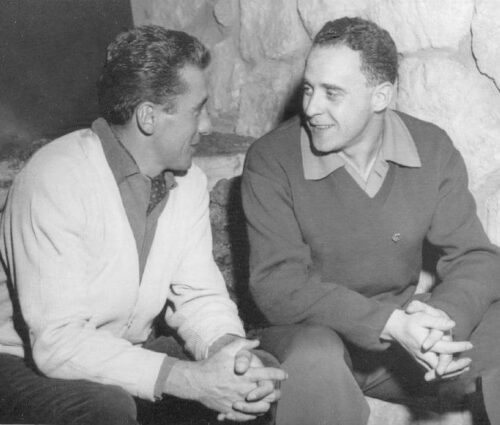
Below: Steve and Frantisek Tikal in Squaw Valley.